
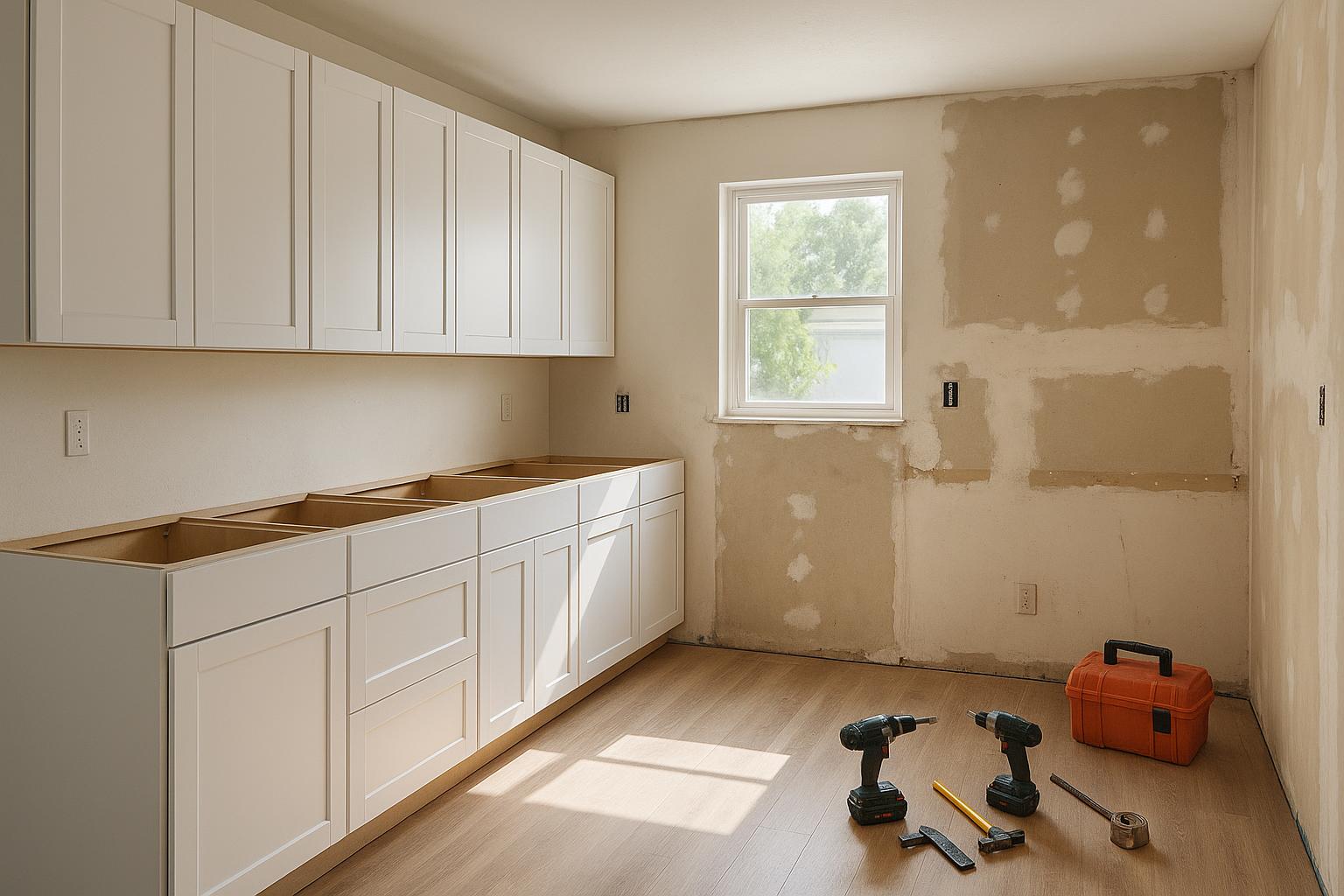
The Kitchen Remodel Timeline: What Really Happens Behind the Scenes
A kitchen remodel is one of the most exciting — and most disruptive — projects you can take on as a homeowner. If you've been dreaming about a new kitchen but feel anxious about the process, you're not alone. One of the most common questions we hear from homeowners in Fort Lauderdale is simple: How long is this going to take, and what should I expect?
The truth is that every kitchen remodel is different. A cosmetic refresh might wrap up in a few weeks, while a full gut renovation can take two to three months or more. But regardless of scope, the process follows a predictable sequence of steps. Understanding that sequence can help you plan your daily routine, set realistic expectations, and actually enjoy watching your new kitchen come to life.
Here's a step-by-step look at what a typical kitchen remodel looks like from start to finish.
Step 1: Design and Planning (2–4 Weeks)
Before any demolition begins, there's a critical planning phase that sets the tone for the entire project. This is where you'll work with your contractor to finalize the layout, choose materials, select cabinetry styles, and nail down a budget.
During this phase, you should expect to:
- Meet with your remodeling team to discuss your goals and lifestyle needs
- Review design concepts, floor plans, and 3D renderings if available
- Select cabinets, countertops, flooring, fixtures, and appliances
- Finalize the scope of work and sign a detailed contract
This is also when your contractor will pull any necessary permits from the City of Fort Lauderdale. Permit timelines vary, but a good contractor will factor this into the schedule from day one. Skipping permits might seem like a time-saver, but it can create serious problems when you go to sell your home or if an inspection reveals unpermitted work.
Step 2: Demolition (2–5 Days)
Once permits are approved and materials are ordered, the real action begins. Demolition is fast, loud, and messy — but it's also one of the most satisfying stages because it signals that your new kitchen is officially underway.
During demolition, the crew will remove old cabinets, countertops, flooring, backsplash tile, and sometimes walls. If your remodel involves changing the layout, this is when structural modifications happen. Your contractor should set up dust barriers and protective coverings to keep the rest of your home as clean as possible.
Pro tip: Set up a temporary kitchen station in another room before demo day. A folding table, microwave, coffee maker, and a cooler can make the weeks ahead much more manageable.
Step 3: Rough-In Work (1–2 Weeks)
This is the behind-the-walls phase that most homeowners don't think about, but it's one of the most important. Rough-in work includes:
- Plumbing: Moving or adding water supply lines and drain lines for the sink, dishwasher, or refrigerator
- Electrical: Updating wiring, adding circuits for new appliances, and installing outlet boxes
- HVAC: Adjusting ductwork if walls have been moved or added
In many Fort Lauderdale homes — especially those built in the 1960s through 1980s — the rough-in phase can reveal outdated wiring or aging plumbing that needs attention. A reputable contractor will communicate any surprises immediately and discuss your options before moving forward.
After rough-in work is complete, the city inspector will need to sign off before the project can proceed. This inspection ensures everything meets current building codes.
Step 4: Drywall, Painting, and Prep (3–5 Days)
With the mechanical systems in place and inspected, the walls get closed up. New drywall is hung, taped, mudded, and sanded smooth. Then the space gets a fresh coat of primer and paint.
This stage also includes any ceiling work, soffit modifications, or accent wall treatments. It might feel like a quiet phase compared to demolition, but it's laying the foundation for everything that comes next.
Step 5: Cabinet and Countertop Installation (1–2 Weeks)
Now the kitchen really starts to take shape. Cabinet installation typically takes a few days, depending on the complexity of the layout and whether you've chosen stock, semi-custom, or fully custom cabinetry.
Once cabinets are set, your countertop fabricator will come out to take final measurements — called templating. The actual countertop installation usually happens about one to two weeks after templating, depending on the material. During this waiting period, other work continues around the kitchen.
This is the stage where homeowners in our service areas — from Wilton Manors to Plantation — start getting really excited, because the design choices they made weeks ago are finally becoming real.
Step 6: Flooring, Backsplash, and Fixtures (1–2 Weeks)
With the major components in place, the finishing details come together quickly:
- Flooring: Whether you've chosen tile, luxury vinyl plank, or hardwood, the flooring crew comes in to complete the installation
- Backsplash: Tile is set, grouted, and sealed behind the countertops
- Fixtures and hardware: Faucets, cabinet pulls, light fixtures, and under-cabinet lighting are installed
- Appliances: Your new range, refrigerator, dishwasher, and range hood are set in place and connected
Each of these tasks might only take a day or two individually, but they often overlap and require careful coordination between different tradespeople.
Step 7: Final Walkthrough and Punch List (1–3 Days)
Before your contractor calls the job complete, you'll do a detailed walkthrough together. This is your chance to point out anything that needs adjustment — a cabinet door that's slightly off, a paint touch-up, a drawer that doesn't close smoothly.
A good remodeling company welcomes this step. At Timberline Building Contractors, we keep a running punch list and don't consider a project finished until every item is resolved to the homeowner's satisfaction.
So How Long Does It All Take?
For a full kitchen remodel in Fort Lauderdale, most homeowners should plan for 6 to 12 weeks from demolition to completion. Smaller projects with cosmetic updates may take less time, while large-scale renovations involving structural changes or custom materials can take longer.
The biggest factors that affect your timeline include:
- Scope of work: A layout change takes longer than a like-for-like replacement
- Material lead times: Custom cabinets and specialty countertops can have longer delivery windows
- Permit and inspection scheduling: Municipal timelines are outside your contractor's control
- Unexpected discoveries: Water damage, mold, or outdated systems found during demolition
How to Keep Your Remodel on Track
The best thing you can do as a homeowner is make decisions early and stick with them. Changes mid-project — while sometimes unavoidable — are the number one cause of delays and budget overruns. Other tips:
- Order appliances as early as possible, since supply chain delays are still common
- Maintain open communication with your contractor throughout the process
- Be flexible with your daily routine and expect some disruption
- Trust the process — there will be messy days, but the result is worth it
Ready to Start Planning?
If you're a homeowner in Fort Lauderdale, Oakland Park, Pompano Beach, Davie, or the surrounding areas and you've been thinking about a kitchen remodel, the best first step is a conversation. At Timberline Building Contractors, we walk you through every stage of the process so there are no surprises — just a beautiful new kitchen you'll love for years to come.
Contact us today to schedule a consultation and get a realistic timeline for your project.